
Last updated November 21, 2026
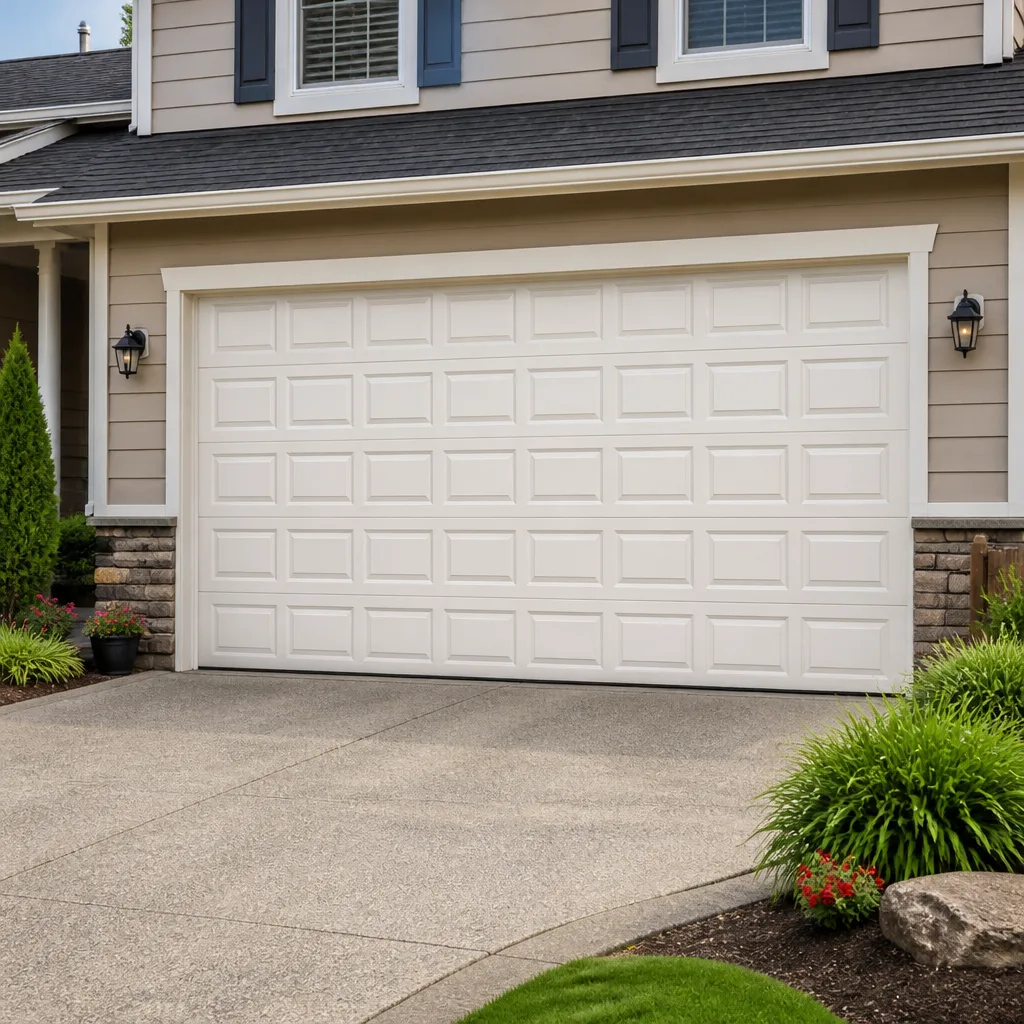 Raised-panel steel
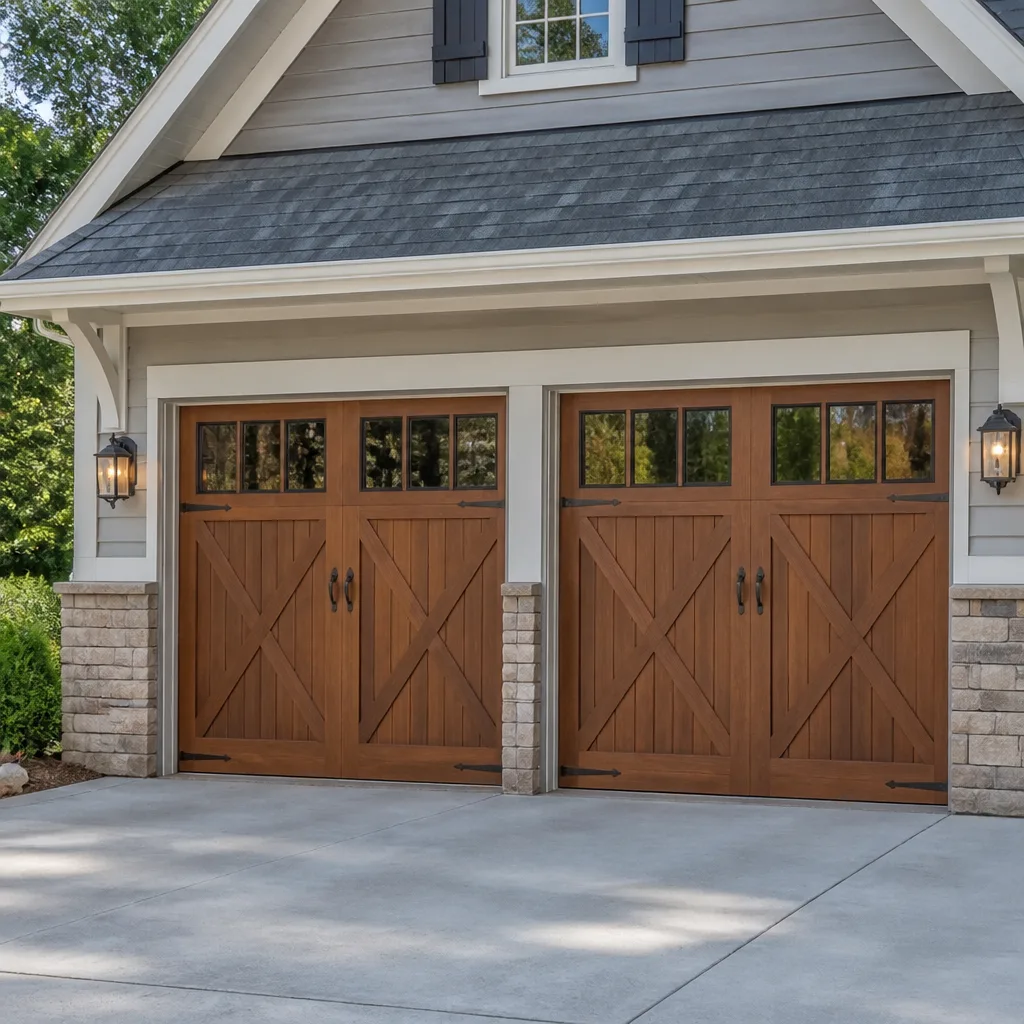 Carriage house
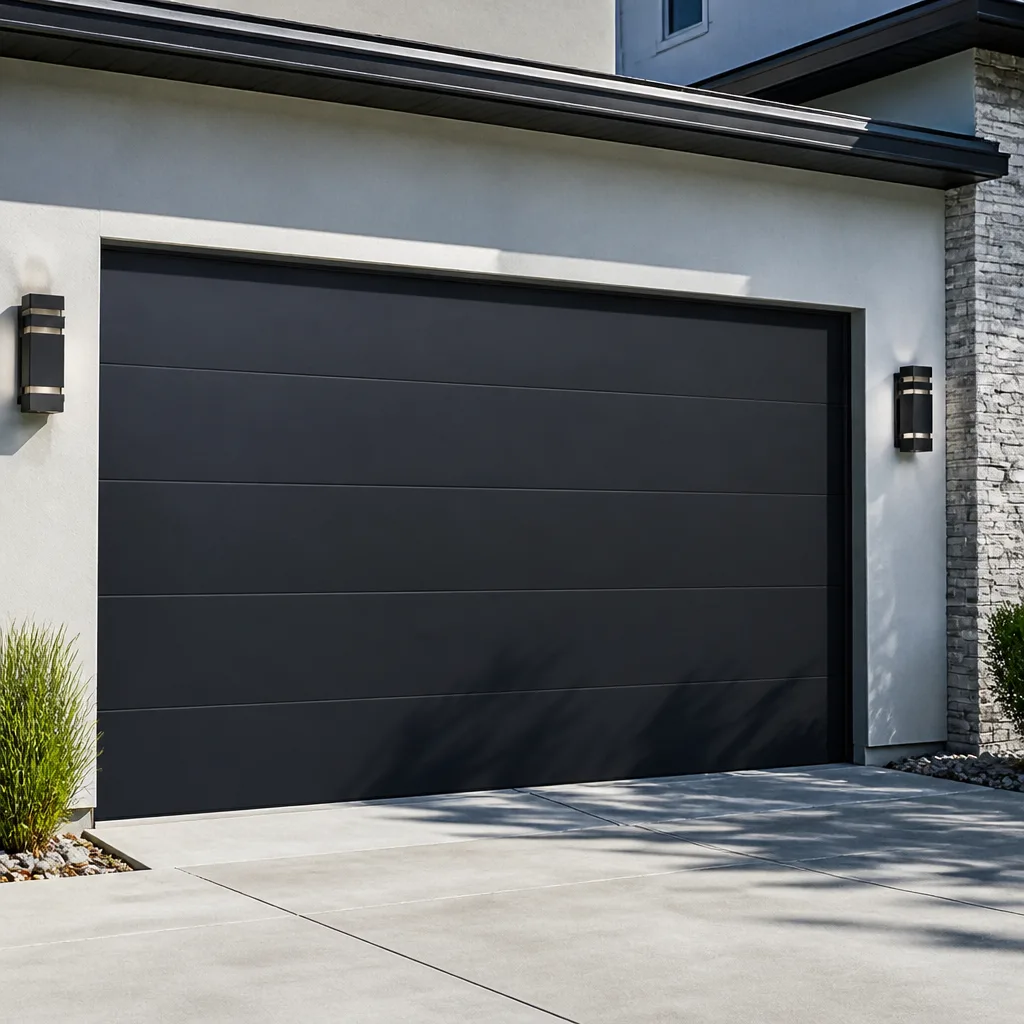 Modern flush
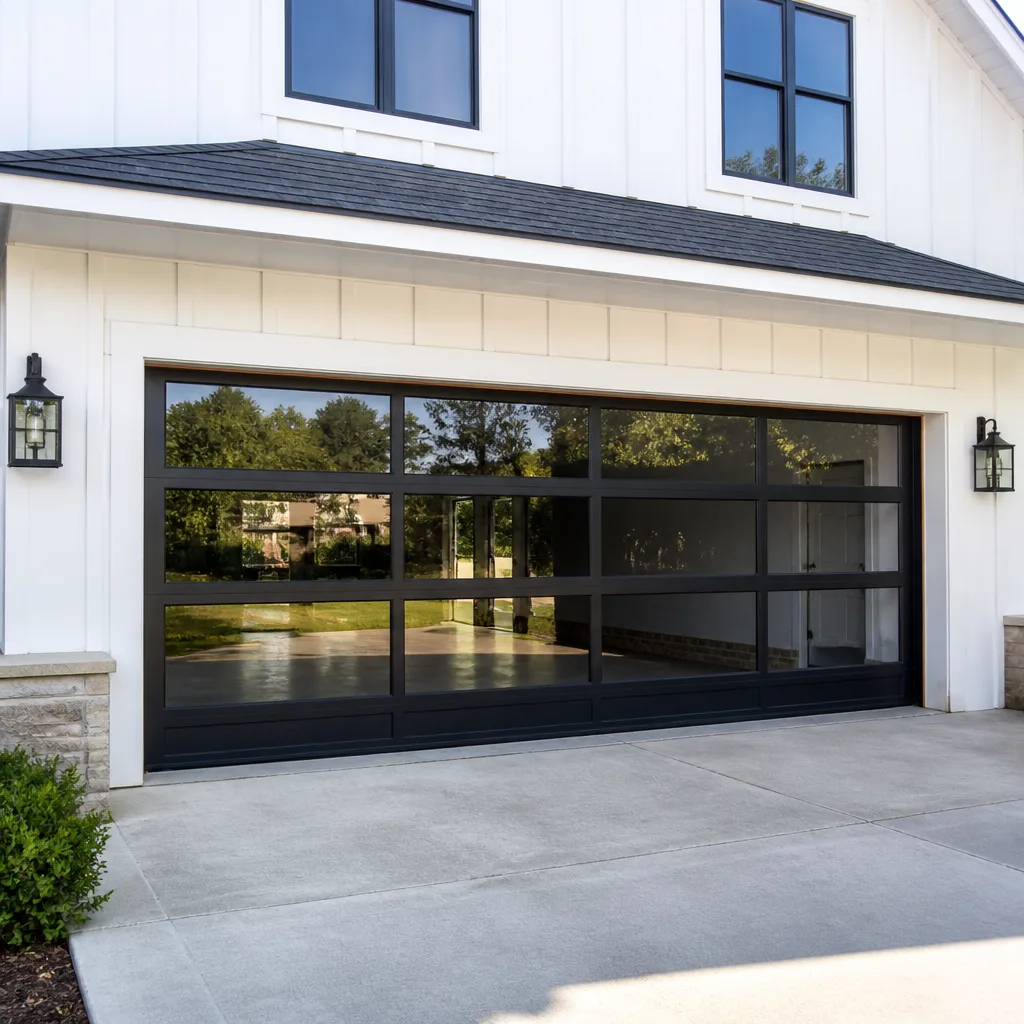 Full-view glass
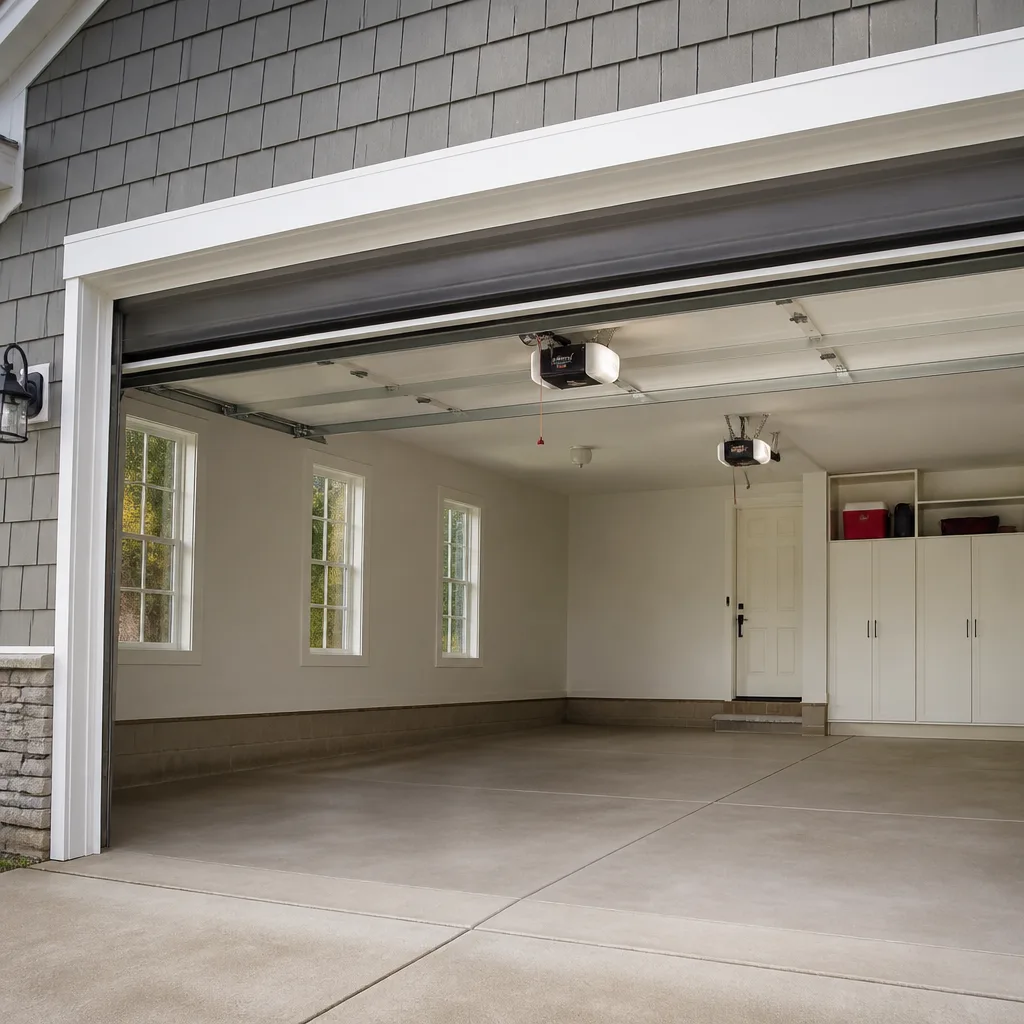 LiftMaster openers
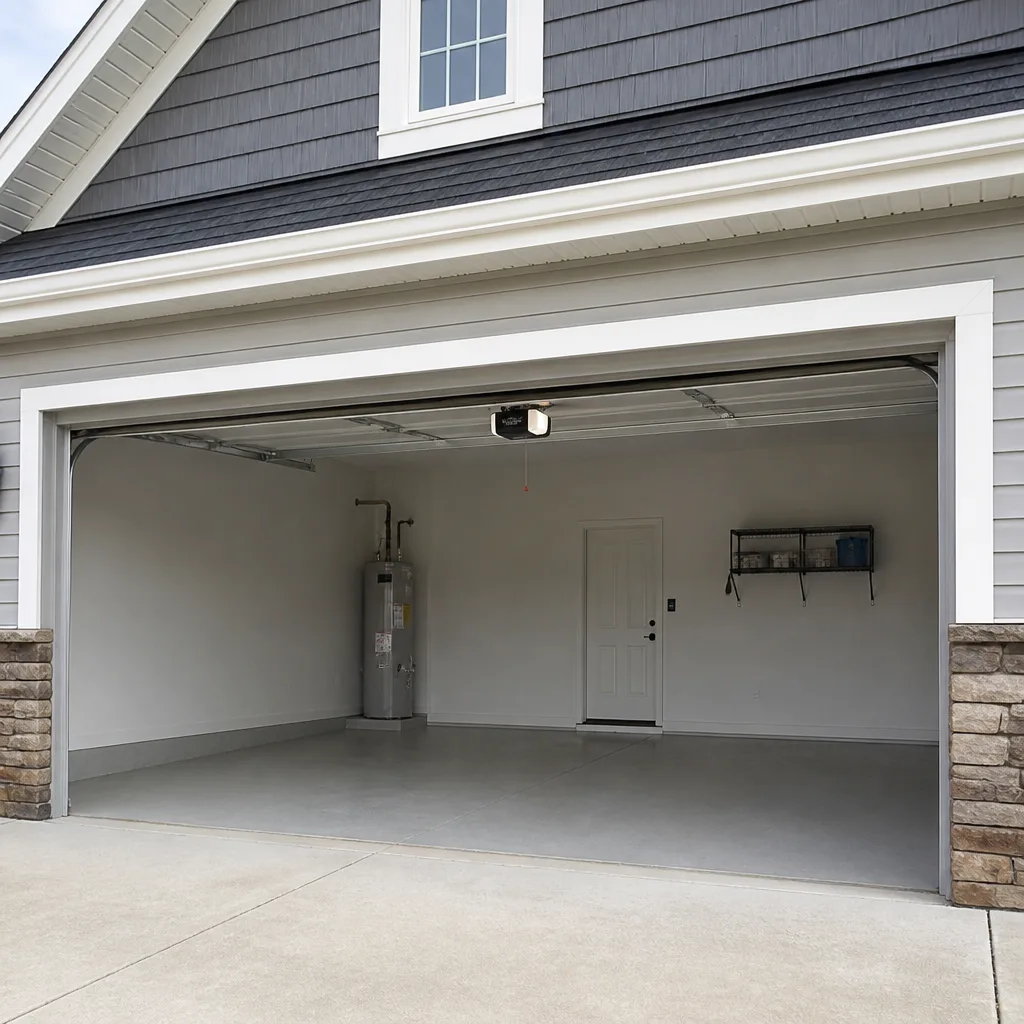 Chamberlain openers
Full 25-point door and opener safety check with every visit - springs, cables, rollers, tracks, and your LiftMaster or Chamberlain opener included
You get a price before we start. It does not change when the pro arrives.
Get your free estimateGarage Door Warning Signs: A Davie Homeowner’s Reference Guide
Most garage door warning signs get listed in guides as a pile of symptoms: grinding noise, slow movement, a door that won’t close. What those lists leave out is the part that matters. Every one of those symptoms traces back to a specific component, and that component has a predictable failure chain. A door that hesitates for two seconds before it moves isn’t just being temperamental. It’s often telling you the opener’s logic board is heat-stressed, and in a South Florida garage that runs hot most of the year, an unaddressed board tends to fail outright before the cooling season ends. So what follows pairs each warning sign with the part behind it, whether you need same-day service or a scheduled appointment, and what tends to change if you wait. Davie homeowners can use this as a diagnostic before they ever pick up the phone.
Quick Answer
In Davie, the warning signs that most often justify a same-day call are a door that reverses or won’t stay closed, a snapped or loudly popping spring, and any sign of a door hanging off its tracks. Slower, noisier, or slightly uneven operation is usually safe to schedule for a regular appointment. The signs themselves matter less than what’s causing them: match your symptom to the component in the table below, and you’ll know both the likely repair and how urgent it really is.
Styles & brands we work with
- Raised-panel steel
- Carriage house
- Modern flush
- Full-view glass
- LiftMaster openers
- Chamberlain openers
Table of Contents
- The Diagnostic Table: 12 Common Davie Service Triggers
- Same-Day Signs vs. Signs That Can Wait
- South Florida Warning Signs You Won’t Find in Generic Guides
- Is It a $15 Fix or a $200 Repair? Reading the Noise
- When the Opener Acts Like a Door Problem (and Vice Versa)
- What Repairs Typically Cost in Davie
- What Happens If You Wait 30, 60, or 90 Days
- A Simple Warning-Sign Checklist for Davie Homes
The Diagnostic Table: 12 Common Davie Service Triggers
The most useful thing you can do before you call anyone is figure out what you’re actually describing. The table below covers the twelve symptoms that drive most garage door calls in Davie, what each one usually points to, and whether the smart move is the same day or a scheduled visit. If your symptom is on this list, you already know more than most callers do.
- Door reverses or won’t close: photo-eye misalignment or a logic-board fault. Same day, because the door is open and your home is exposed.
- Loud bang, door suddenly won’t lift: torsion spring breakage. Same day, never a do-it-yourself job.
- Door slams down instead of lowering slowly: broken extension spring or a failed drum cable. Same day.
- Door won’t move and opener hums: a stripped opener gear or a seized trolley. Same day.
- Door moves but the opener won’t engage the track: broken J-arm or release cord. Same day.
- Grinding or squealing during travel: dry or seized rollers and hinges. Can usually be scheduled.
- Door hangs unevenly, one side lags: a stretched or broken torsion cable. Same day if the gap is severe.
- Door rattles and shakes the whole frame: loose hinges and loose mounting hardware. Can be scheduled, but sooner is cheaper.
- Remote works only right at the door: failing remote battery or a worn opener receiver. Scheduled.
- Door opens on its own or at random: a phantom signal or a board relay that has failed in the closed position. Same day, because it means your door is unlocked.
- Visible rust bleed on the door face: bracket corrosion behind the panel. Scheduled, but not if you can see the paint splitting.
- Door gets halfway up and stops: a misadjusted travel limit on the opener, or binding at the track. Scheduled if it’s consistent.
The table gives you the symptom and the likely cause. Pairing that with the urgency call below is what turns it into a plan. Our technicians have up to 14 years of experience, and much of that time goes into exactly this kind of triage, because a call about a “broken door” and a call about a “broken opener” can sound the same on the phone and turn out to be entirely different repairs.
Same-Day Signs vs. Signs That Can Wait
A garage door that won’t close is a security problem, but a garage door that squeaks is not. Sorting the two apart saves you money and keeps you from making a nervous call over something that can wait for a regular appointment. Here’s the split we use.
The three signs that justify same-day service
- Any reversal or refusal to close. If the door goes down and bounces back up, the safety system is either seeing a phantom obstruction or the opener’s logic is failing. Either way, it’s not locked, and getting it locked today is the whole reason we offer same-day service.
- A loud snap or bang followed by a door that won’t lift. That’s almost always a broken torsion spring. Never try to lift the door out of this by hand, and never wind the spring yourself.
- A door hanging off the track or one side visibly lower than the other. A door off the track can drop, and a twisted door stresses every panel connection at once.
The signs that can safely wait for a scheduled visit
- Gradual noise buildup: grinding, squeaking, or rattling that has crept in over weeks.
- A remote that works intermittently or only up close.
- Cosmetic rust spots that haven’t split the paint.
- A door that’s slightly slow but still goes up and down evenly.
For anything on the scheduled list, the right move is a free measure or a scheduled diagnostic, not an urgent call. Call (855) 658-4182 and we’ll book you into the next opening.
South Florida Warning Signs You Won’t Find in Generic Guides
Generic garage door guides are written for a country where summers are short and the air is dry. Davie’s climate is the opposite: heat that builds through the afternoon, humidity that holds, and months of it. That produces two warning signs almost no national guide mentions.
Rust bleed on the door face
If you see a thin orange stain or a rust-colored streak running down a door panel, don’t assume it’s surface rust. In many cases it’s bleed from a bracket or hinge mount that’s corroding behind the panel. You can’t see it, but the rust is eating the fastener from the back. Left alone, the fastener eventually loses grip, and the hinge tears through the panel face. Look at every hinge and bracket edge, not just the outer skin.
Salt-haze and heat-haze on photo-eye lenses
The photo-eye safety sensors sit just above the floor, pointed at each other. In Davie, road dust, lawn chemical overspray, and general humidity film collect on those lenses over a season. The beam weakens, the opener reads it as a phantom obstruction, and the door reverses. Homeowners replace whole openers for this. A wipe with a soft damp cloth is often the entire fix, and a scheduled maintenance check catches it before it turns into a call.
A third sign: heat stress on the opener
An opener board that sits in an unventilated garage gets hot enough to warp its relays over time. The early symptom is a door that hesitates two seconds before it lifts. If you catch that early, a board or a unit replacement fixes it cheaply. If you wait, the board usually fails entirely, and the whole opener comes out. LiftMaster and Chamberlain units are common in Davie garages, and both are vulnerable to this in the same way.
Is It a $15 Fix or a $200 Repair? Reading the Noise
Noisy doors are the most misdiagnosed door problem. The same grinding sound can come from a hinge pin that needs a drop of oil or a roller that has ground flat and needs replacing. Before a technician ever arrives, you can narrow it down by listening to where the noise comes from and when it happens.
- Listen to the timing. A noise at the very start of travel is usually the opener. A noise that builds steadily through the whole travel is usually the rollers or the track.
- Listen to the character. Squeaking that rises and falls with the door is dry metal on metal. Grinding that stays constant is a flat-spotted roller or a worn bearing. A thumping sound is a loose hinge plate or a screw that’s backing out.
- Look for the shiny wear marks. Bright metal on a track bend or a hinge pin is a tell that the part is rubbing and losing material. That’s a replacement, not a lube job.
- Check the track for debris. Small stones and leaf litter collect in the track bend, especially in a Davie garage that sees a lot of yard debris. That’s a free fix with a brush.
As a rough rule: if the noise is clean, steady, and just out of the ordinary, start with lubrication of the hinges, rollers, and track bend and see if it quiets. If the noise is grinding or thumping and it doesn’t change after that, it’s a part replacement. A worn roller is a small ticket item. A flat-spotted track bend is a bigger one. Either way, the price is quoted and agreed before any work starts, and it’s set by the written estimate, not by how the tech feels on the day.
For a door that needs repair rather than a new door, we handle garage door repair as our core service, and the diagnostic visit covers both repair types.
When the Opener Acts Like a Door Problem (and Vice Versa)
This is the most expensive misdiagnosis in the trade. The opener and the door are two systems that share a single interaction, and a fault in one often presents as a fault in the other. Homeowners who guess wrong end up paying for an opener replacement that a door repair would have fixed, or a door work order when the logic board was the actual problem.
Openers that look like door problems
- Opener presses down but the door doesn’t move: the travel limit or force setting is off, and the opener thinks the door is already closed. The door is fine. The opener’s settings are wrong.
- Door reverses on the way down: nine times out of ten this is the photo-eyes or the safety reverse force, not the door itself. Test by wiping the lenses before you assume a mechanical problem.
- Door won’t respond to remote at all, but the wall button works: the receiver, not the door. Check the remote battery first, then the opener’s antenna or board.
Door problems that look like opener faults
- Door binds and stops partway: the opener is straining to push a door that’s heavier than it’s rated for. That’s a spring that’s lost tension, not a call for a bigger opener.
- Door opens but the opener makes a long grinding noise: a stripped gear in the opener, but the underlying cause is often a door that’s been running too heavy for months.
- Door runs fine by hand but the opener barely moves it: the door’s hardware is binding, and the opener is doing too much work. Look at the rollers and hinges first.
Our team works on both sides of this line. We’re factory-familiar with LiftMaster and Chamberlain systems, plus legacy Genie and Raynor openers, so we can tell you whether the fault is in the opener or in the door before we start pulling parts. If the fix is garage door opener repair, we do that on the same visit, and if it turns out to be a spring or a hinge, we do that too.
What Repairs Typically Cost in Davie
Most single repair jobs in Davie land in a predictable band, and knowing the band helps you spot an upsell. Every price below is an estimate for planning purposes. The number that matters is the one on your written quote, because the estimate is free and the price is quoted and agreed before any work starts. The ranges below reflect both the part and the labor for the job.
- Spring replacement (one spring): typically $180 to $340. A matched pair is usually replaced together, so a pair costs about twice that, roughly $360 to $680.
- Opener repair: typically $120 to $280 depending on the part.
- Roller replacement (full set): typically $100 to $200.
- Hinge and bracket replacement: typically $80 to $180.
- Cable replacement: typically $150 to $300.
- Track realignment: typically $150 to $300.
- Full opener replacement (installed): typically $350 to $700, depending on the unit.
- New door installation (full): typically $900 to $2,800, depending on the door style, size, and opener.
| Repair | Typical range | Most common urgency |
|---|---|---|
| One spring | $180-$340 | Same day |
| Matched spring pair | $360-$680 | Same day |
| Opener repair | $120-$280 | Same day |
| Roller set | $100-$200 | Scheduled |
| Cable replacement | $150-$300 | Same day if snapped |
| Opener replacement, installed | $350-$700 | Scheduled |
| New door, installed | $900-$2,800 | Scheduled |
Two things to keep in mind. First, a spring price is for one spring. If both springs are the same age and one has gone, the second is close behind, which is why most technicians recommend a matched pair. Second, the range you see is a range because a door that has been running heavy for a year may need more than the spring. The written estimate covers whatever the door actually needs, and nothing gets done without your go-ahead.
If a replacement is the right call rather than a repair, we handle garage door installation and will measure your opening, order the door, and schedule the install around your week, not the other way around.
What Happens If You Wait 30, 60, or 90 Days
Most warning signs don’t stand still. A small fault that a repair fixes at the start of the chain gets worse, and each stage of the chain is more expensive than the last. Here’s the general pattern we see across the trade, not attached to any one home.
If you wait about 30 days
A dry roller that’s been grinding may go from a lube fix to a replacement. A photo-eye that’s hazing over may start causing daily reversals, which puts wear on the opener’s gears and the door’s springs. A slight rust spot may start lifting the paint at the edge. None of these are catastrophic yet, but the work has grown.
If you wait about 60 days
A stretched spring can snap outright, at which point a door that ran on its opener now has to be lifted by hand, and it won’t go. A door that binds slightly can start wearing the cables unevenly, and an uneven cable is a door that comes off the track. A failing opener board can go from “hesitates two seconds” to “does nothing at all.”
If you wait about 90 days
What could have been a spring or a board replacement often turns into a full component replacement, and sometimes the door panels and brackets come along for the ride. A door that has been dropped hard on a failed spring can crack a panel or tweak the track. That’s a different job and a bigger number. The pattern holds whether the door is a Clopay, an Amarr, or a Wayne Dalton. The make of the door changes the part cost; it doesn’t change the failure chain.
A Simple Warning-Sign Checklist for Davie Homes
A five-minute walkaround once a month catches most of this before it becomes a call. We’ve seen enough of these to know the six checks below cover the bulk of it.
- Open and close the door by hand. It should lift smoothly and stay balanced halfway up. If it feels heavy or won’t stay, the spring is losing tension.
- Watch the photo-eyes. Wipe both lenses with a soft cloth and confirm the door reverses when you pass your hand through the beam.
- Listen, don’t just look. Note any new grinding, squealing, or thumping, and where in the travel it happens.
- Check the track edges. Run a hand along the inside of both rails for debris, bends, or shiny wear marks.
- Look for rust bleed on the door face. Any orange streak near a hinge or bracket needs a closer look at the fastener behind it.
- Test the manual release. Pull the release cord with the door closed. You should be able to raise it by hand and the opener should re-engage cleanly when you run it again.
If any of the six checks fails, note what you saw. That’s the detail that lets a technician arrive knowing the likely cause, which is a faster repair and a shorter day for you.
Common Mistakes to Avoid
- Assuming a reverse is a door problem. Photo-eye misalignment and a board that’s misreading the beam are the two most common causes of a reversal. Wiping the lenses and checking the safety reverse takes a minute and can save a service call.
- Replacing the opener when the door is the problem. A door that’s been running heavy for weeks strains the opener’s gear. A new opener on a heavy door fails the same way. Find the door issue first.
- Skipping the second spring. If both springs were installed together, the second one is on the same clock as the first. Replacing one and waiting for the other is a false economy.
- Letting rust bleed go. The stain on the door face is a sign the bracket behind the panel is corroding. Left alone, the fastener loses grip and the panel tears.
- Ignoring a two-second hesitation. In Davie’s heat, a logic board that hesitates before it lifts is heat-stressed. It has a limited life left, and an early replacement or repair is far cheaper than the full unit.
- Running the door up and down to “test” it five or six times in a row. That’s exactly what wears out a weakened spring. Once or twice is fine. If it’s failing, stop and call.
- Booking an urgent call for a scheduled problem. Squeaky rollers and intermittent remotes can wait for the next opening. Save the same-day slot for the door that won’t close.
See the difference
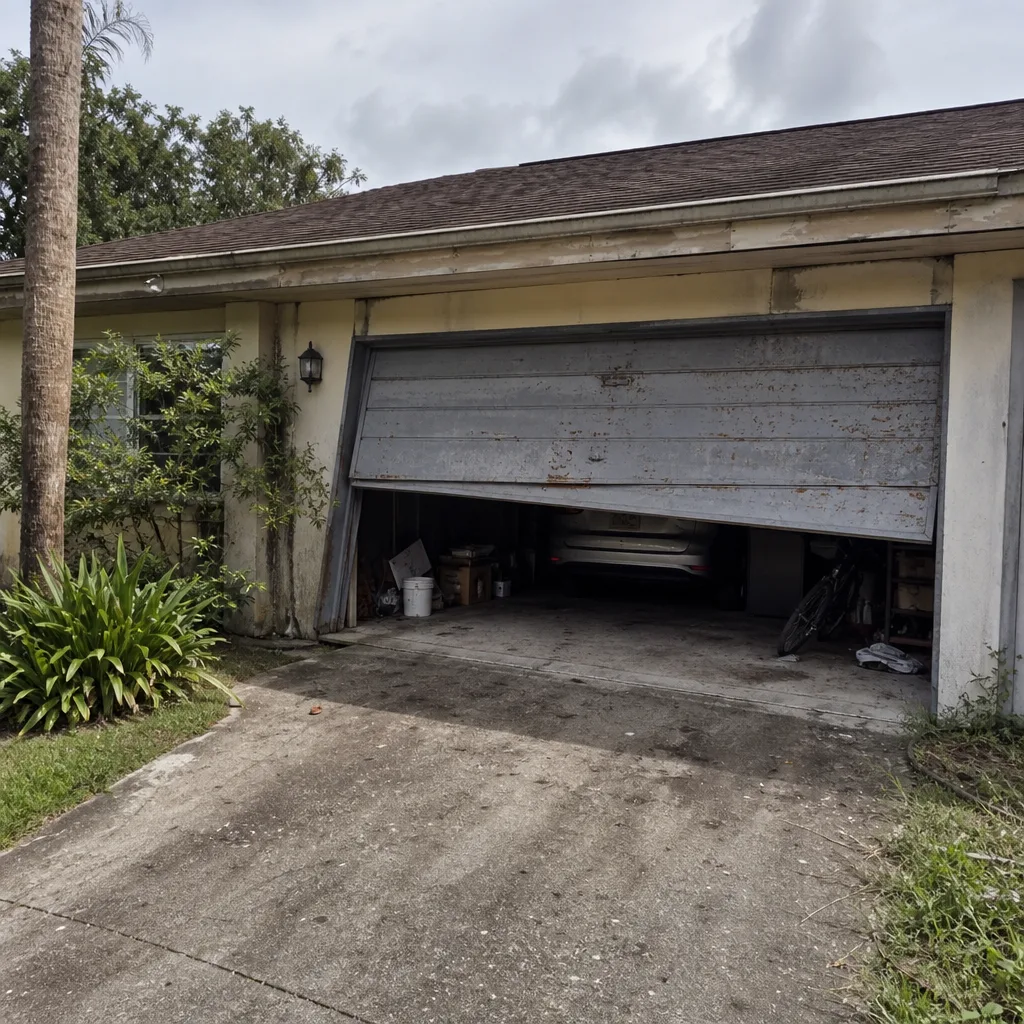 Before
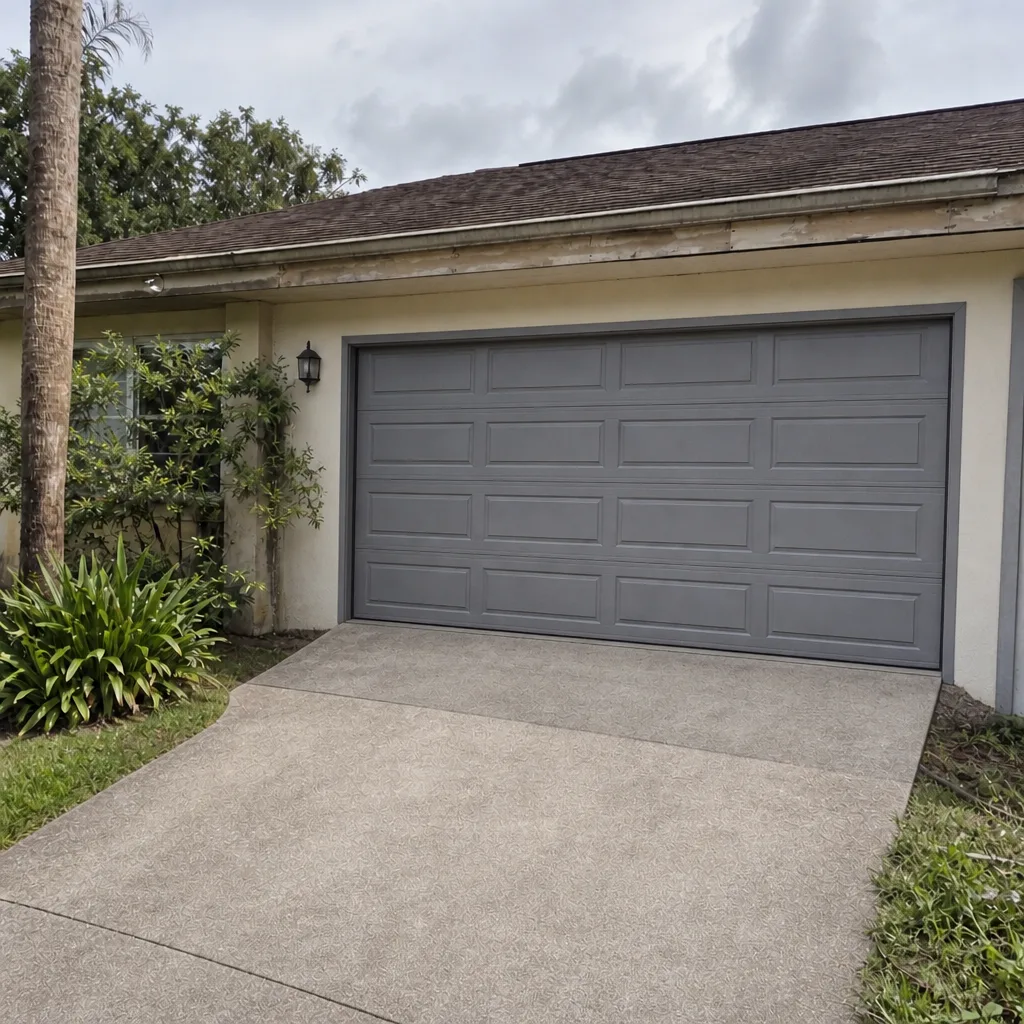 After
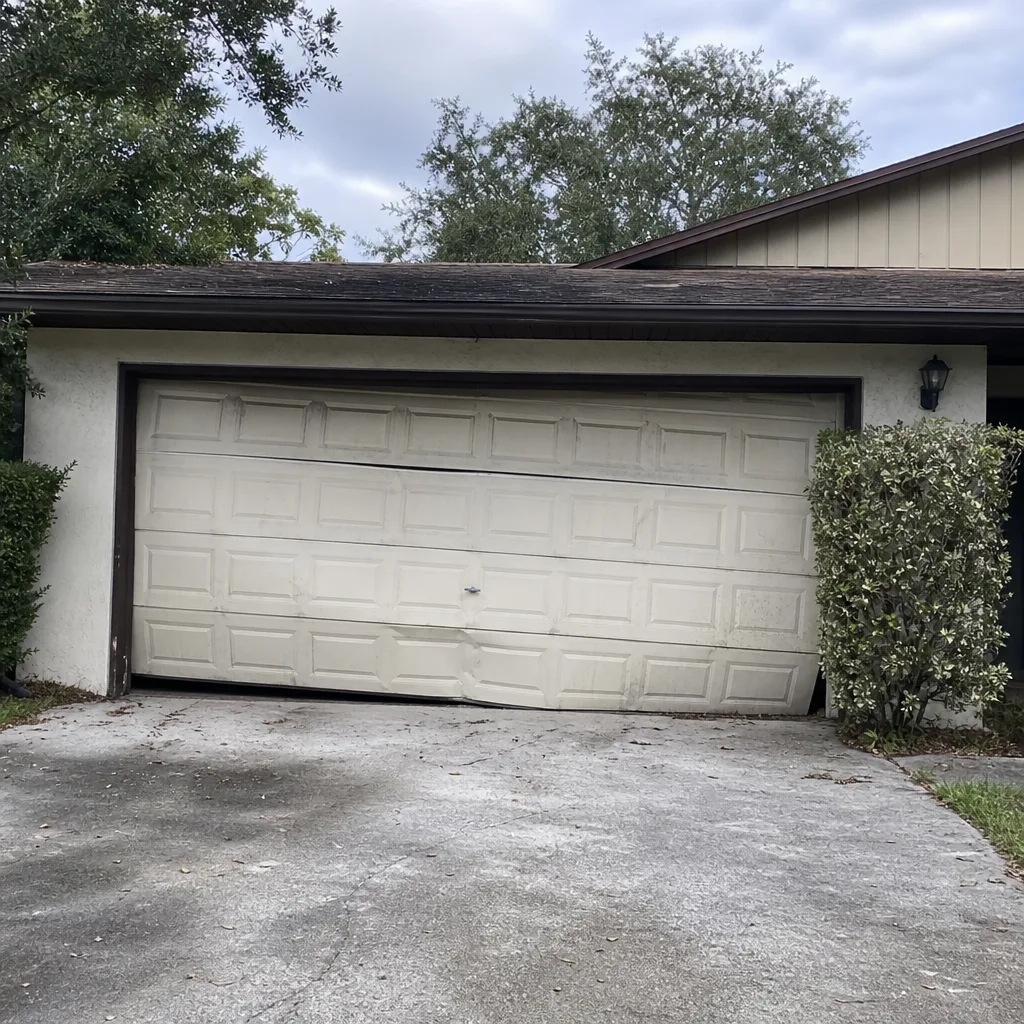 Before
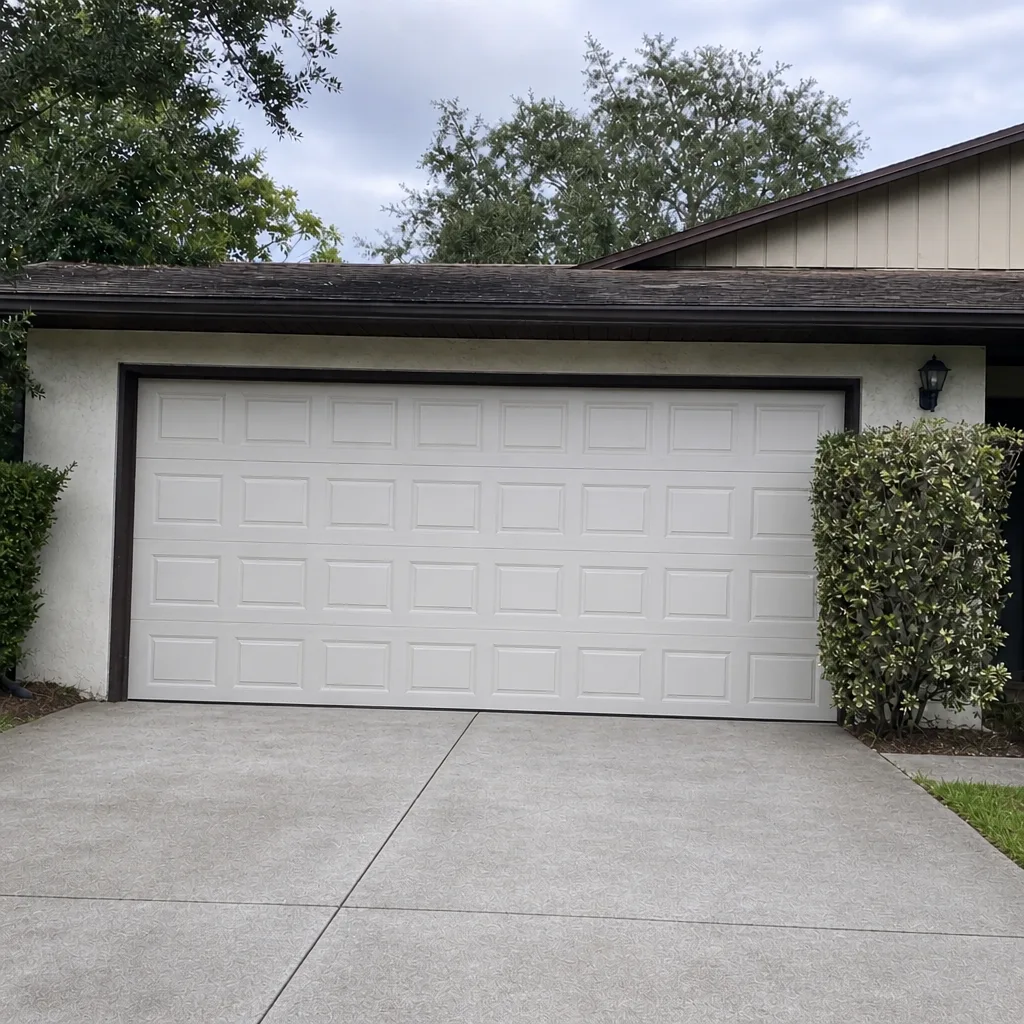 After
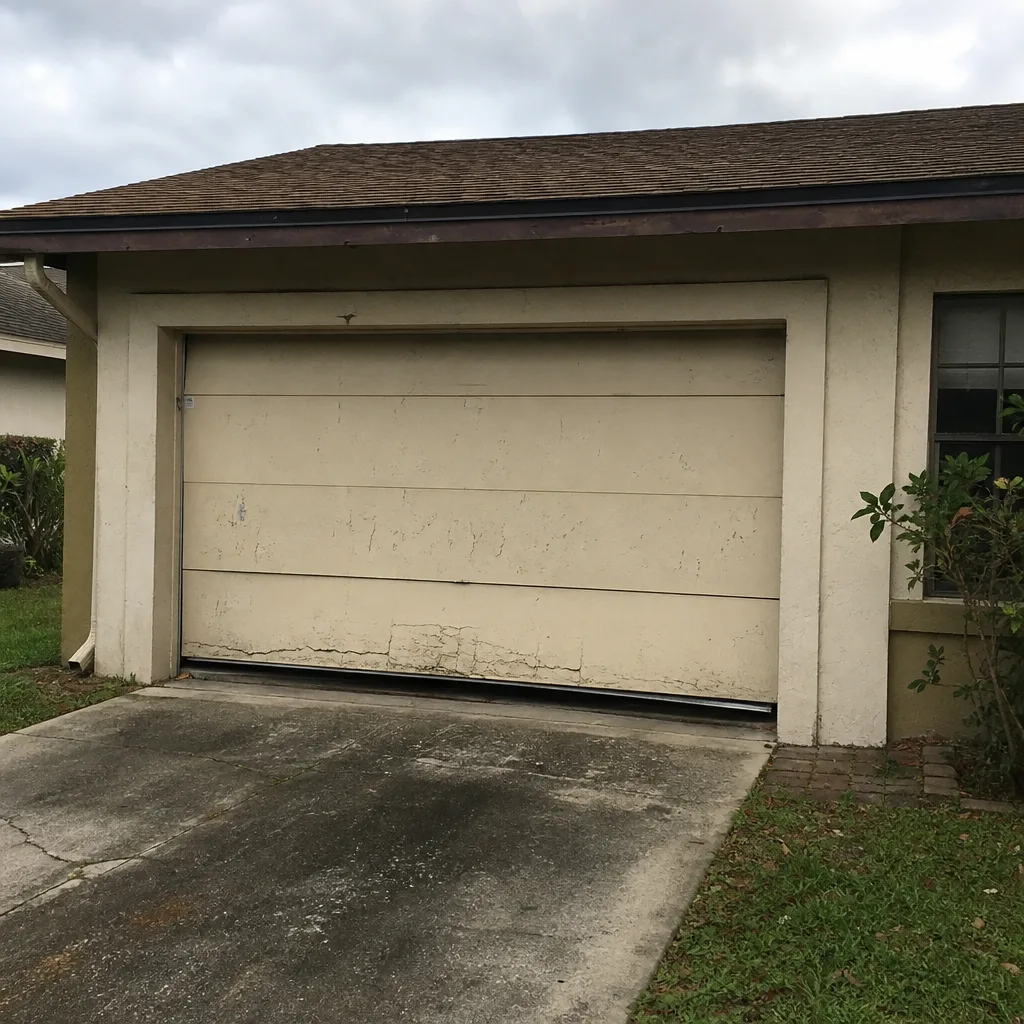 Before
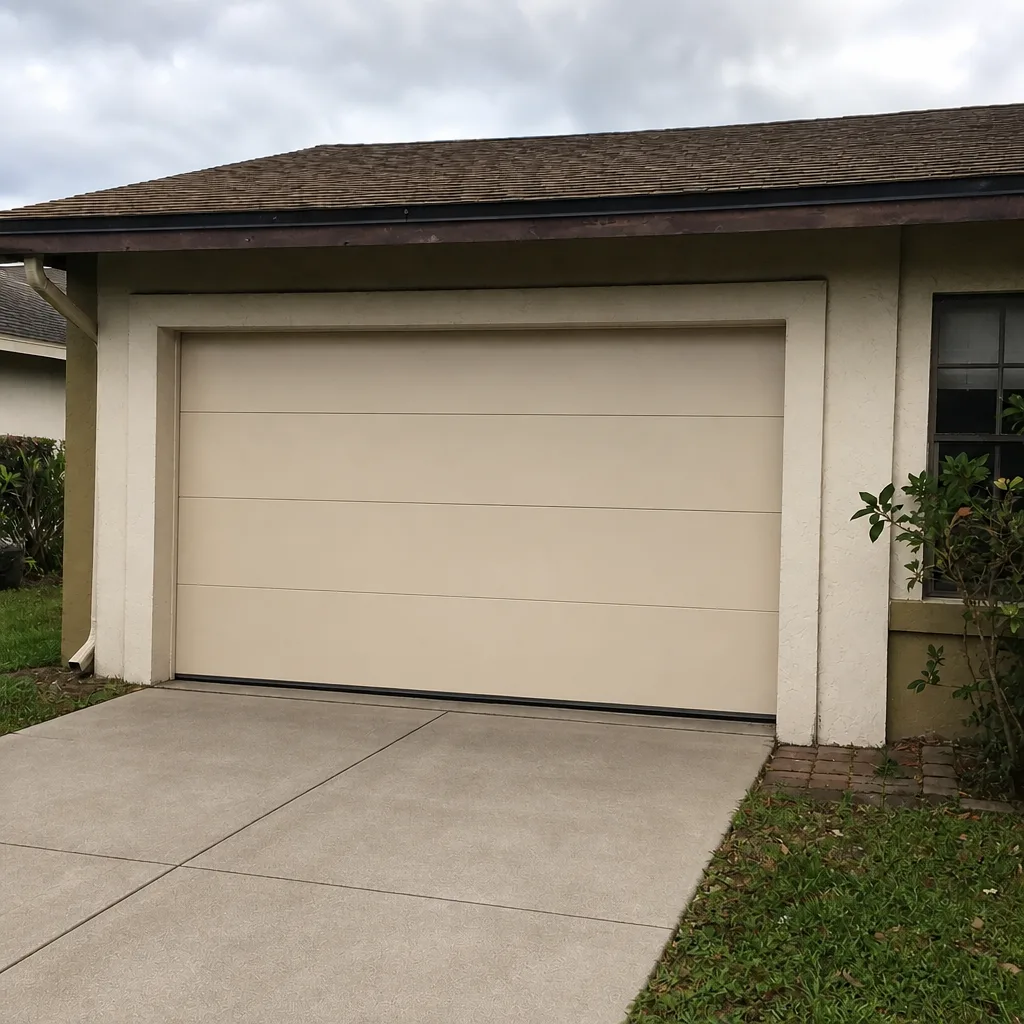 After
When to Call a Professional
Call a professional the moment the door is a safety or security issue, not before. That means any reversal, any door that won’t close, any snapped spring, any door off the track, and any opener fault that leaves the bay unlocked. Those are the same-day cases. For everything else, a scheduled appointment is the right move and often costs less because the repair hasn’t spread. There are two places we strongly advise against going it alone: a torsion spring under tension and the electrical side of an opener. Those cause serious injury. The local technician is licensed and insured as their state requires, and Davie Garage Door Repair Pros offers free estimates in Davie. Call (855) 658-4182 for a free estimate. We answer 24/7. Fast dispatch from 7am to 7pm, Sunday through Friday.
If you’re starting from scratch on a door or an opener, we also cover the full lifecycle through Davie Garage Door Repair Pros, so one call covers repair, install, or emergency.
Frequently Asked Questions
The most common are a door that reverses instead of closing, a loud snap followed by a door that won’t lift, a door that hangs unevenly, grinding or squealing during travel, and rust bleed on the door face near a hinge. Spring failures lead the list, with photo-eye faults and opener logic-board issues close behind.
A single spring replacement typically runs $180 to $340. A matched pair is usually done together, and that runs about twice the single price, roughly $360 to $680. The written estimate sets the final price, and it’s quoted before any work starts. Call (855) 658-4182 for an exact quote: estimates are free.
Yes, for the signs that justify it: a door that won’t close, a broken spring, or a door off its track. We offer same-day service and dispatch Sunday through Friday, 7am to 7pm. Call (855) 658-4182. We answer 24/7.
No. The price you agree to is the price you pay, and it’s set by the written estimate before any work starts. If a technician finds a second problem, they’ll explain it and give you a separate number to approve. You won’t get a surprise total on the invoice.
The local professional who shows up is licensed and insured as their state requires. We connect you with that vetted local pro, and our technicians have up to 14 years of experience working on the brands you’ll find in Davie homes, including LiftMaster, Chamberlain, Genie, and Raynor systems.
Listen to the character of the noise. A steady squeak that rises and falls with the door is usually dry metal, and lubrication often fixes it. A grinding or thumping that doesn’t change after lubrication usually means a worn roller or hinge, which is a replacement. Call (855) 658-4182 and we’ll walk you through it: estimates are free.
The Bottom Line
A garage door warning sign is a diagnostic clue, not just a nuisance. Match the symptom to the component – a reversal to the photo-eyes or board, a loud bang to a spring, a rusty streak to a bracket behind the panel – and you’ll know whether to call today or schedule. In Davie’s heat, the two-second hesitation and the rust bleed are the signs most worth catching early, because they’re the ones that quietly grow into full replacements. The costs here are estimates, the written quote is the price, and the same-day call is for the door that won’t close. Everything else can wait for a booking, and everything is repairable if you catch it in time.
Written by the team at Davie Garage Door Repair Pros.